
Themes & Inspiration
Alternate History & a Forgotten Future
Mythology & the Divine
Apocrypha & the Watchers
Epic Poetry & the Oral Tradition
What if the medieval world came not before our own—but long after it?
The Ballad of Emrys is set thousands of years after mankind's technological civilization has fallen. Humanity has rebuilt, but the truth of the old world has faded into myth, legend, and fragments of forbidden knowledge. The Watchers remain as guardians of that forgotten past, observing mankind while ensuring it never again discovers the means of its own destruction.
Immortal beings. Mortal lives. Ancient laws that bind them both.
Greek mythology was a major inspiration for the Watchers and the world surrounding them—the idea of powerful, almost divine beings existing alongside humanity while governed by laws, duties, rivalries, and consequences of their own. The Watchers possess extraordinary power, but their greatest burden is restraint: they must witness the struggles of mankind without intervening.
What if the beings who watched humanity never left?
The mythology of the Watchers draws inspiration from ancient apocryphal traditions, particularly stories of mysterious beings charged with observing mankind. The Ballad of Emrys reimagines that idea within its own mythology: an ancient order whose purpose is not to rule humanity, but to prevent it from rediscovering the knowledge that once brought about its destruction.
Before history was written,
it was sung.
From ancient epics to medieval ballads, stories were carried across generations by poets, bards, and minstrels. That tradition sits at the heart of The Ballad of Emrys. Emrys's companion is not merely traveling beside him—he is witnessing his journey and turning it into legend. The novel explores the space between what truly happened and the story that history remembers.
The Burden of Watching
If you had the power to save someone—but were forbidden to use it—could you simply stand by?
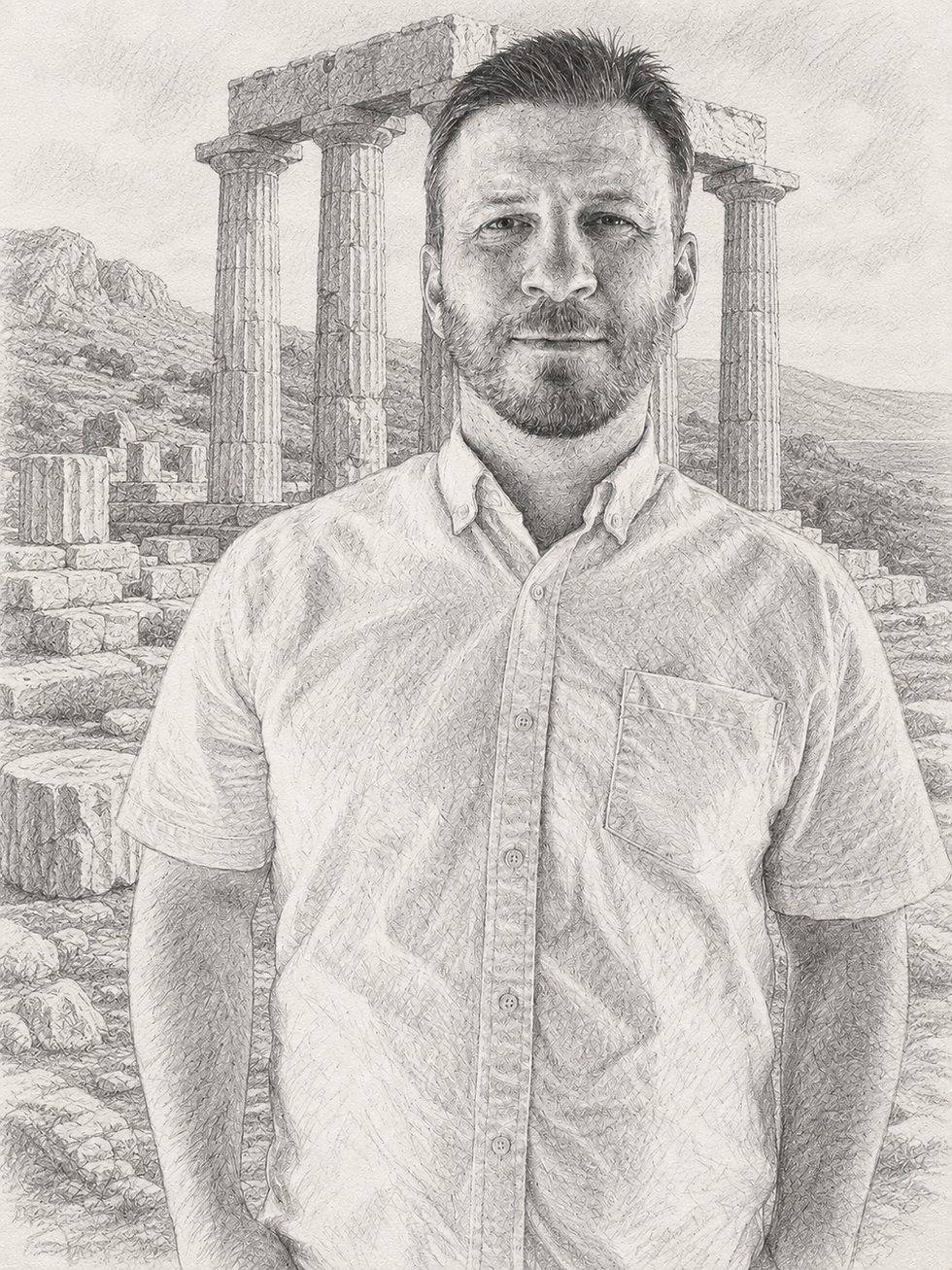
DEAN WATERS
Dean Waters is an author of epic fantasy that explores the space between history, mythology, and the forgotten worlds that might have been.
Drawing inspiration from Greek mythology, ancient apocryphal traditions, alternate history, and the great epic poems and legends of the past, Waters creates stories where the line between myth and history is rarely as clear as it seems.
His debut novel, The Ballad of Emrys, began with a question: What if mankind's distant future looked remarkably like its ancient past?
From that idea emerged the world of the Watchers—ancient beings charged with observing humanity and preventing it from rediscovering the knowledge that once brought about its destruction. At the center of the story is Emrys, the first new Watcher born in thousands of years, and the journey that will ultimately lead him to become the Watcher of the North.
Waters has a particular fascination with stories that feel as though they might have been discovered rather than invented: forgotten histories, ancient orders, lost civilizations, unreliable legends, and ordinary people living in the shadow of extraordinary events.
The Ballad of Emrys is the first novel in The Watchers Trilogy.